
On Friday, May 15, 2026
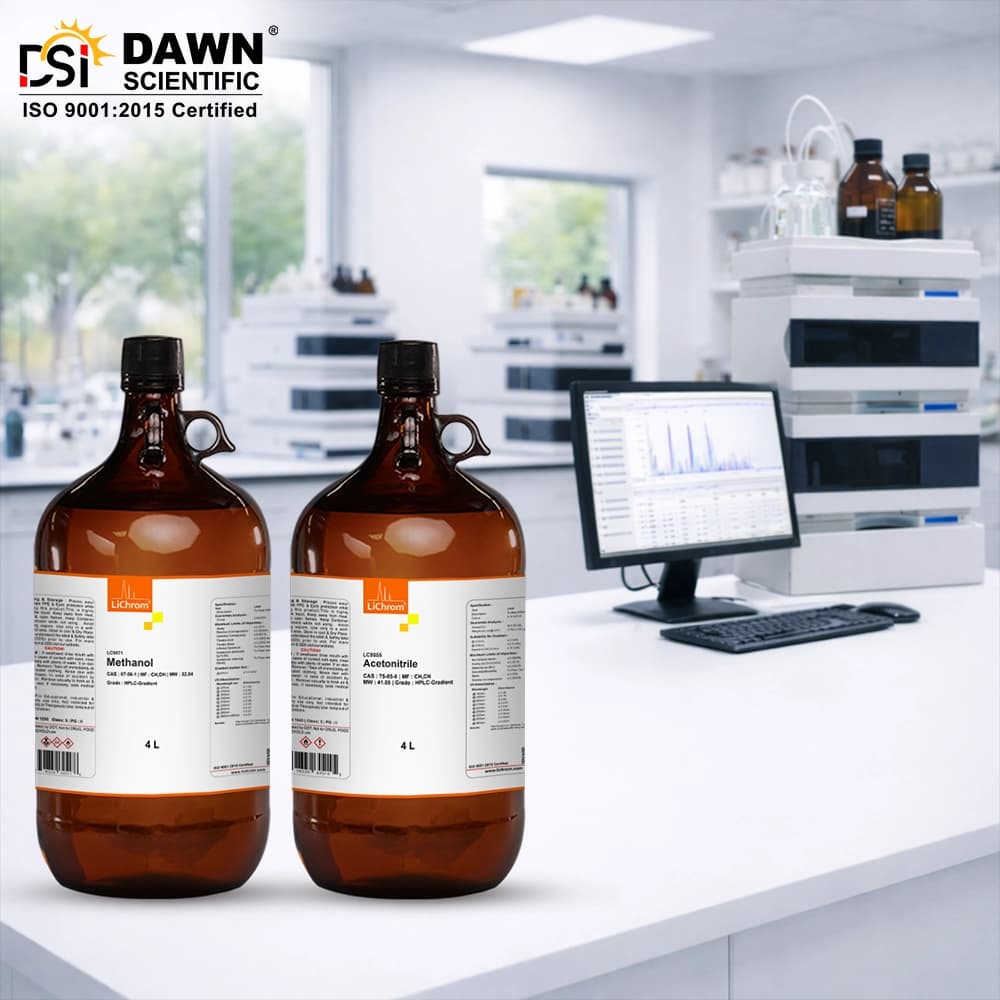
In an analytical laboratory where HPLC is used, the choice of the appropriate HPLC solvents is essential in ensuring reproducible and accurate results. Acetonitrile vs methanol in HPLC is one of the most popular solvent pairs used in the development of methods.
The two solvents are widely used as an Organic mobile phase in HPLC, reverse phase chromatography in particular, where the properties of the solvent have a direct impact on the separation efficiency, retention time, and system performance.
Acetonitrile and Methanol are the solvents of choice, as they work well with numerous analytes in reverse-phase HPLC solvents.
These HPLC mobile phase solvents are very important in streamlining the analytical processes.
To obtain the correct solvent one needs to know the difference between acetonitrile and methanol in HPLC.
In comparing Acetonitrile vs Methanol with one another in the context of reverse phase chromatography then the decision will be determined by the requirements of the analysis:
This comparison of HPLC solvents is critical in the optimization of a method.
One of the questions that is often asked is why acetonitrile is applied in HPLC. The reasons include:
This is because acetonitrile is the best choice when it comes to high-performance applications.
A good guideline of solvent selection used in HPLC used in the laboratory includes:
To achieve the best results, the appropriate chromatography should be selected.
High purity of HPLC solvents is necessary to reduce contamination, baseline noise and provide reproducibility.
At Dawn Scientific, our solvents are of high quality, aimed at giving the analytical accuracy and wide performance in the lab.
The Acetonitrile vs Methanol comparison in HPLC shows that both solvents possess some specific benefits. Acetonitrile is a better choice since it is fast and sensitive, though; methanol is more flexible and affordable.
Knowledge of HPLC solvent choice and the importance of such parameters as the elution strength of HPLC, HPLC viscosity and backpressure, and HPLC selectivity and retention is the key to the successful HPLC to enhance the efficiency of the chromatographic process.
Disclaimer: All the information on this blog is published in good faith and for general information purposes only. The information contained in this blog might be provided on an “as is” based on Wikipedia, Google, and other scientific articles. We are not liable for any injuries or damages for the use of the information. Please do your research before you use this information for any purpose.